


Pool Services
Pool Leak Detection
Professional pool leak detection uses pressure testing, dye testing, electronic listening, and thermal imaging to pinpoint exactly where your pool is losing water — without unnecessary demolition or guesswork.
What We Offer
Pool Leak Detection
Pool Leak Detection — How Professionals Find Exactly Where Your Pool Is Losing Water
A leaking pool is more than an inconvenience. It wastes thousands of gallons of water, drives up utility bills, saturates the surrounding soil (which can undermine the pool structure, the deck, and even nearby foundations), and forces your chemical system to work overtime to treat constantly replenished water. Left unaddressed, even a small leak compounds into a serious and expensive problem.
Professional pool leak detection eliminates the guesswork. Using a combination of pressure testing, dye testing, electronic listening, and in some cases thermal imaging, a trained technician can pinpoint the exact location of a leak — whether it is in the shell, the plumbing, the fittings, or the equipment — without unnecessary excavation or demolition.
Signs Your Pool May Be Leaking
Water loss from a pool can be caused by evaporation, splash-out, backwash discharge, or an actual leak. Before calling a professional, it helps to understand what normal water loss looks like versus what indicates a problem.
The bucket test is the standard DIY method for distinguishing evaporation from a leak. Fill a bucket with pool water and set it on the pool step so the water level inside the bucket is equal to the pool water level outside. Mark both levels. Wait 24 hours with the pump running normally, then compare. If the pool lost significantly more water than the bucket, you likely have a leak.
Common signs of a pool leak include:
Water level dropping more than 1/4 inch per day (beyond normal evaporation). Air bubbles in the return lines or pump strainer basket, which indicate a suction-side plumbing leak. Wet, soft, or eroded soil around the pool, deck, or equipment pad. Cracks in the pool shell, deck, or coping that were not previously present. Algae growth that is difficult to control despite proper chemical treatment (constantly refilling with untreated water dilutes your chemistry). An autofill device that runs frequently or continuously. A sudden or unexplained increase in your water bill.
How Professional Leak Detection Works
A trained leak detection technician follows a systematic process to isolate and locate the source of water loss. Here is how it works:
Step 1 — Interview and observation. The technician begins by talking with the pool owner — how long has the water loss been occurring, how much water is being lost, are there any visible signs, has anything changed recently? They then perform a thorough visual inspection of the pool, deck, equipment, and surrounding area.
Step 2 — Static vs. operational water loss test. The technician may mark the water level and observe loss with the pump running versus with the pump off. If the pool loses water faster with the pump on, the leak is likely on the pressure (return) side of the plumbing. If it loses water faster with the pump off, the leak may be on the suction side. If the rate is the same regardless of pump operation, the leak is likely in the shell.
Step 3 — Pressure testing the plumbing. Each plumbing line — suction, return, main drain, skimmer — is individually isolated, plugged, and pressurized with air using a compressor. The technician monitors the pressure gauge. A line that cannot hold pressure has a breach. This test identifies WHICH line is leaking without having to dig anything up.
Step 4 — Electronic listening. Once a leaking line is identified through pressure testing, the technician uses electronic listening equipment to locate exactly where along the line the leak is occurring. Specialized hydrophones or geophones detect the sound of air or water escaping through the breach. The technician listens along the path of the plumbing line, and the signal gets louder as they approach the leak location.
Step 5 — Dye testing. For leaks in the pool shell, at fittings, around lights, or at the skimmer, dye testing is the gold standard. The technician uses a syringe to release a small amount of colored dye near suspected areas — cracks, fittings, tile line, light niches, skimmer throats. If there is a leak, the dye will be visibly drawn toward and into the breach by the suction of escaping water.
Step 6 — Thermal imaging (when applicable). Infrared cameras can detect temperature differences in the deck and surrounding soil caused by leaking water. A saturated area will present a different thermal signature than dry ground. This technique is particularly useful for locating slab leaks and underground plumbing leaks beneath the deck.
Step 7 — Report and recommendations. The technician documents every test performed, identifies the location and nature of each leak found, and recommends a repair approach. Some leaks can be repaired non-invasively (underwater epoxy, fittings replacement), while others require excavation to access the affected plumbing.
Equipment Used in Professional Leak Detection
Professional leak detection relies on specialized equipment that is not available to homeowners:
Pressure testing rigs with gauges, plugs, and compressors for isolating and pressurizing individual plumbing lines. LeakTronics and similar brands manufacture purpose-built kits for pool plumbing testing.
Electronic listening devices (hydrophones and geophones) that amplify the sound of leaking water or escaping air to pinpoint the location along a buried pipe.
Dye testing syringes loaded with concentrated, highly visible dye formulated to move with water currents without dispersing too quickly.
Infrared thermal cameras capable of detecting sub-surface temperature variations caused by water saturation.
Underwater cameras and scopes used to visually inspect plumbing lines, fittings, and hard-to-reach areas of the pool shell.
Common Leak Locations
Pools tend to leak in predictable places. Understanding these common failure points helps explain what the technician is looking for:
Skimmer connections. The joint where the skimmer body meets the pool shell is a frequent leak point, especially in older concrete pools where the bond between the skimmer and the gunite has separated.
Return fittings and light niches. Any penetration through the pool shell — return jets, light fixtures, cleaner lines — is a potential leak point. The sealant or gasket around these fittings deteriorates over time.
Main drain. The main drain at the deepest point of the pool connects to underground plumbing. Settlement, root intrusion, or pipe deterioration can cause leaks here.
Underground plumbing. PVC plumbing lines buried beneath the deck are subject to ground movement, root intrusion, chemical degradation, and joint failures. These leaks are the most difficult to access but are reliably located through pressure testing and electronic listening.
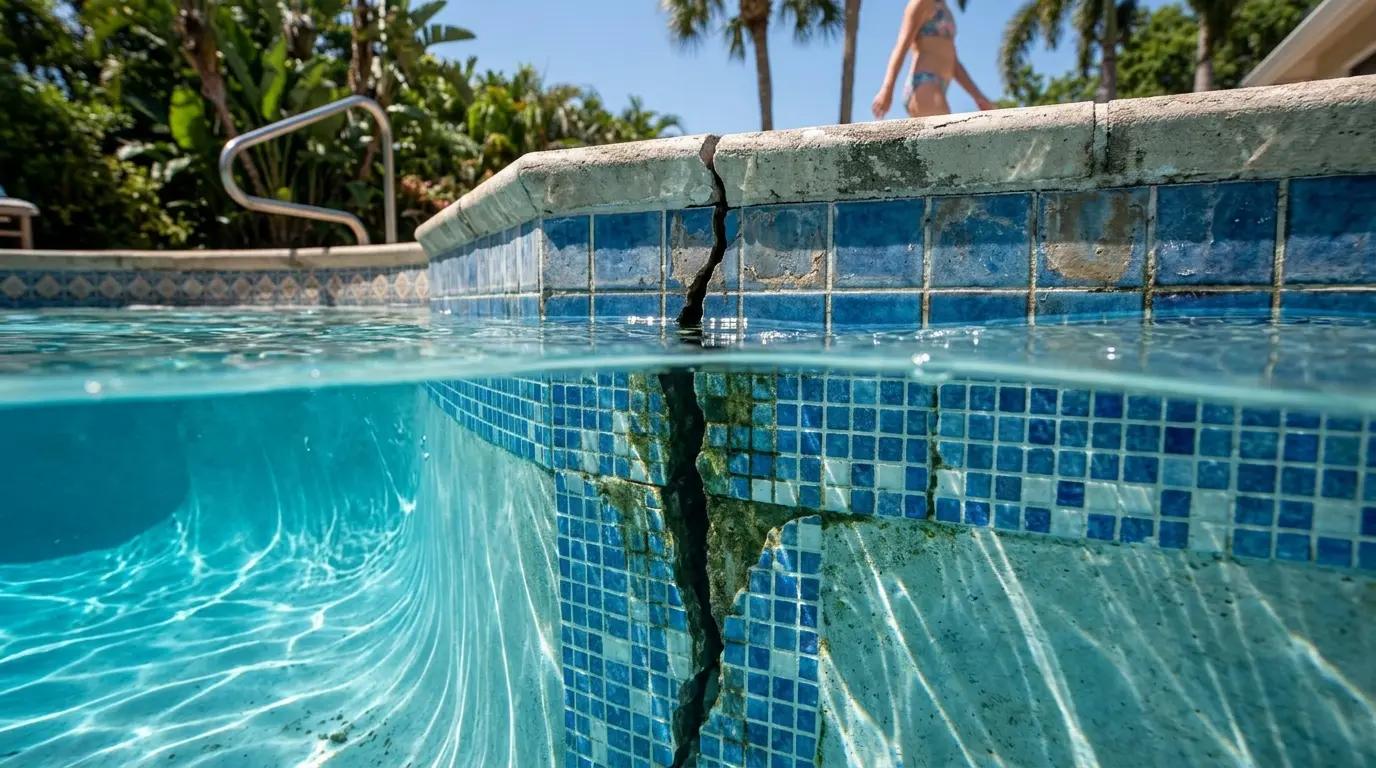
Pool shell cracks. Structural cracks in concrete pools, stress cracks in fiberglass, or tears in vinyl liners can all allow water to escape. Not all cracks leak — many are cosmetic — which is why dye testing is used to confirm.
Pool Leak Detection FAQ
How much water loss is normal? Pools typically lose 1/8 to 1/4 inch of water per day to evaporation, depending on temperature, humidity, wind, and sun exposure. Pools with water features, spas, or heavy use may lose more to splash-out. Consistent loss beyond 1/4 inch per day warrants investigation.
How much does pool leak detection cost? Professional leak detection typically costs $250 to $600 for a residential pool, depending on the complexity of the system and the number of plumbing lines. This fee covers the diagnostic service — repair costs are separate and depend on the nature and location of the leak.
How long does leak detection take? Most residential pool leak detection appointments take 1.5 to 3 hours. Complex pools with extensive plumbing, spas, or water features may take longer.
Can a pool leak fix itself? No. Pool leaks only get worse over time. What starts as a minor seepage can erode surrounding soil, shift the pool structure, and escalate into a major repair.
Should I keep filling the pool while it is leaking? Yes — maintaining the water level prevents damage to the pump (which should not run dry), keeps the pool shell under proper hydrostatic pressure, and ensures the leak location remains detectable. However, schedule detection service promptly to stop the ongoing water loss.
What happens after the leak is found? The technician provides a repair recommendation. Simple leaks at fittings or in accessible plumbing can often be repaired the same day. Underground plumbing leaks require excavation. Shell cracks may be repaired with underwater patching compounds or may require draining for structural repair.
---
Need leak detection in your area? View our service locations to schedule a diagnostic appointment.
Why Homeowners Choose Us
LeakTronics Certified
Our team uses professional electronic listening equipment to locate leaks precisely the first time.
Minimal Digging
We pinpoint the leak source so the repair is targeted — no trenching up your entire pool deck.
Fast Diagnosis
Most leak calls are diagnosed in a single visit. You’ll know what’s wrong the same day we come out.
Transparent Pricing
Flat-rate diagnosis fee, itemized repair quote, no surprise charges on the final bill.
Frequently Asked Questions
How do I know my pool has a leak?
Watch for rising water bills, a pool that drops faster than normal evaporation, wet spots around the equipment pad, or air in the pump basket. If you’re losing more than a quarter inch per day beyond normal evaporation, you likely have a leak worth checking.
How quickly can you come out?
We aim to schedule leak detection within a few business days. For active emergencies — visible flooding, rapid water loss, equipment failure — call us directly and we’ll get to you as fast as we can.
Do you handle the repair after you find the leak?
Yes. After diagnosis we’ll give you a written quote for the repair. You’re free to have someone else do the work, but most homeowners have us handle it start to finish — one crew, one invoice, one point of accountability.
What’s a typical leak detection fee?
We charge a flat diagnosis fee that covers the site visit and detection work. If you proceed with the repair, the diagnosis fee is often credited toward the job. Call for the current rate.
Our Process
How It Works
From your first call to the final walkthrough, here is how we bring your project to life.
Request a Free Quote
Call us or fill out our online form. Tell us about your property, your vision, and any constraints. We respond fast.
On-Site Assessment
Michael and the team visit your home, evaluate the site, and walk you through the right pool model and layout for your yard.
Professional Installation
Our CPO-certified crew handles excavation, set, plumbing, equipment, and finish work using our proven proprietary process.
Final Walkthrough
We test every system, walk you through operation and care, and make sure your new pool is everything you expected.
Service Areas We Proudly Serve
Based in Lake Havasu City, we serve homeowners across Mohave and La Paz Counties within a 50-mile radius. Select your city to learn more about pool services in your area.
Ready to Build Your Dream Pool?
Fill out the form below to request a free consultation or get a quote. Our expert pool team is ready to help you create the perfect backyard oasis.
Request a Call Back