

Pool Services
Swimming Pool Inspection
A professional pool inspection evaluates the structural integrity, equipment condition, plumbing, electrical systems, and safety compliance of a swimming pool — essential before buying a home or addressing ongoing issues.
What We Offer
Swimming Pool Inspection
Swimming Pool Inspection — What Gets Checked and Why It Matters
A professional swimming pool inspection is a thorough evaluation of every system and component associated with your pool — the structure, the equipment, the plumbing, the electrical, the safety barriers, and the water chemistry. It provides a clear, documented picture of the pool's current condition and identifies issues that need attention, from minor maintenance items to major structural concerns.
Pool inspections are most commonly requested during real estate transactions, but they are equally valuable for current pool owners who want an objective assessment of their pool's health, for homeowners dealing with persistent problems they cannot diagnose, and for anyone purchasing a property with a pool they have not previously maintained.
When You Need a Pool Inspection
Buying a home with a pool. A standard home inspection does not include a detailed pool evaluation. Home inspectors may note obvious surface issues, but they do not pressure-test plumbing, evaluate equipment condition, or assess structural integrity. A dedicated pool inspection fills this gap and can save a buyer tens of thousands of dollars by identifying hidden problems before closing.
Selling a home with a pool. A pre-listing pool inspection identifies issues you can address before they become negotiation points. It also provides documentation that the pool was professionally evaluated, which builds buyer confidence.
Ongoing problems. If your pool has persistent issues — water loss, equipment failures, staining, cracking, recurring algae — a comprehensive inspection can identify root causes that piecemeal repairs have not addressed.
Annual or biennial maintenance. Even pools that appear to be running well benefit from periodic professional evaluation. Equipment degradation, slow leaks, and code compliance gaps can develop gradually and go unnoticed until they become expensive.
What a Professional Pool Inspection Covers
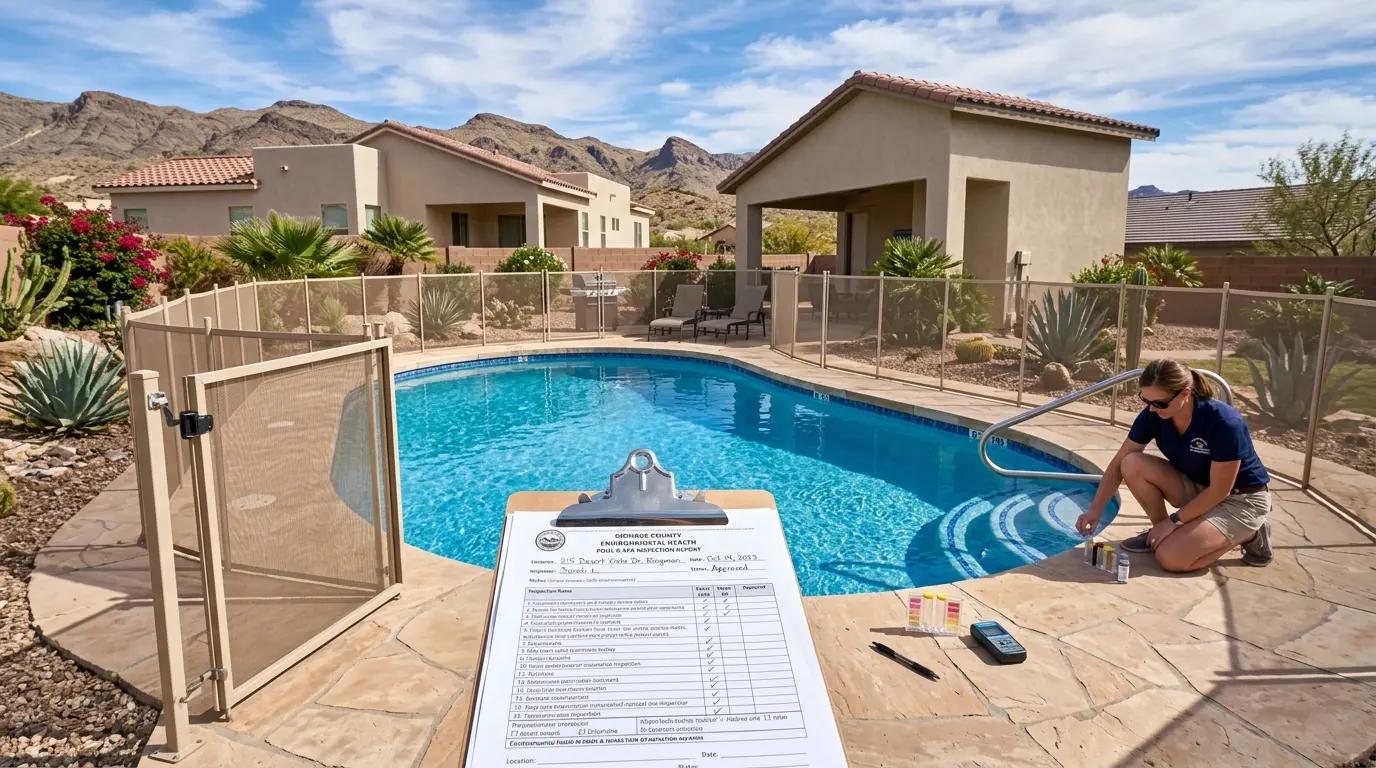
A thorough inspection follows a systematic checklist. Here is what a certified inspector evaluates:
Pool structure and surface. The inspector examines the pool shell for cracks, spalling, delamination, staining, discoloration, and settlement. In plaster pools, they look for crazing (fine surface cracks), etching (chemical erosion), and scaling. In fiberglass pools, they check for blistering, gelcoat wear, and structural flex. In vinyl liner pools, they inspect for tears, wrinkles, fading, and bead track integrity.
Decking and coping. The surrounding deck is evaluated for cracks, heaving, settling, trip hazards, and drainage issues. Coping stones are checked for looseness, mortar deterioration, and proper overhang. Expansion joints are inspected for deterioration.
Equipment evaluation. Every component on the equipment pad is assessed — pump, filter, heater, salt system, automation, timer, chemical feeder, and any auxiliary equipment. The inspector checks for leaks, corrosion, unusual noise, proper operation, and estimated remaining useful life. Manufacturer labels are documented for age verification.
Plumbing. Suction and return lines are evaluated for proper flow. The inspector checks for visible leaks at connections, unions, and valves. In many inspections, a static pressure test is performed on the plumbing lines to detect underground leaks. Skimmers are inspected for cracks, and main drains are checked for proper cover compliance (the Virginia Graeme Baker Pool and Spa Safety Act requires specific anti-entrapment drain covers).
Electrical. All pool electrical components are checked for proper bonding and grounding — a critical safety requirement. GFCI (ground-fault circuit interrupter) protection is verified for all pool-related circuits. Wiring condition, junction boxes, and light niches are evaluated. The inspector checks that underwater lights are properly sealed and that the voltage complies with current code (many older pools have 120V lights that should be upgraded to 12V LED for safety).
Safety barriers and compliance. Fencing, gates, latches, door alarms, and other barrier components are evaluated against current building code requirements. The inspector checks fence height, gap spacing, gate self-closing and self-latching function, and latch height. Non-compliant barriers are documented.
Water chemistry. A water sample is tested for free chlorine, pH, total alkalinity, calcium hardness, cyanuric acid (stabilizer), total dissolved solids (TDS), and metals (copper, iron). Results are compared against recommended ranges and any imbalances are noted.
Spa and water features. If the pool includes an attached spa, water features, slides, diving boards, or other accessories, each is inspected for proper operation, structural condition, and safety compliance.
The Inspection Report
A professional pool inspection produces a written report — typically 10–30 pages — documenting findings for every area inspected. Reports include photographs, descriptions of issues found, severity ratings (safety concern, major deficiency, minor deficiency, maintenance item), and recommendations for repair or further evaluation.
For real estate transactions, this report gives the buyer a clear understanding of what they are inheriting and provides a basis for negotiation or repair requests. For current pool owners, it serves as a prioritized maintenance and repair roadmap.
What an Inspection Does Not Include
A standard pool inspection is a visual and functional evaluation performed on a single visit. It does not include:
Destructive testing (cutting into the deck or pool shell), underground camera scoping of plumbing lines (this is a separate service), full leak detection with electronic equipment (also a separate service, though the inspector may note signs of a leak), or water quality testing for bacteria or contaminants beyond standard chemistry.
If the inspection reveals signs of a leak, structural concern, or electrical issue, the inspector will typically recommend engaging a specialist for further evaluation.
Pool Inspection Certifications
Look for inspectors who hold recognized certifications. Common credentials include the Certified Pool/Spa Inspector (CPI) designation from the Pool & Hot Tub Alliance (PHTA), LeakTronics Certified Pool Inspector, and NSPF (now PHTA) Certified Pool Operator (CPO). These certifications require training, examination, and in many cases continuing education.
Pool Inspection FAQ
How long does a pool inspection take? A thorough residential pool inspection typically takes 1.5 to 3 hours, depending on the size of the pool, the number of equipment components, and whether a spa or water features are present.
How much does a pool inspection cost? Residential pool inspections generally range from $250 to $500. Pools with spas, extensive equipment, or commercial applications may cost more. The cost of an inspection is small compared to the potential cost of undiscovered problems.
Should I get a pool inspection before buying a house? Absolutely. A pool is one of the most expensive features on a property to repair or replace. An inspection can identify tens of thousands of dollars in hidden issues — cracked plumbing, failing equipment, structural settlement, code violations — before you close.
Can I be present during the inspection? Most inspectors welcome the homeowner or buyer to be present. It is an excellent opportunity to learn about the pool's systems, ask questions, and see any issues firsthand.
What happens if the inspection finds problems? The report documents every finding with severity ratings. In a real estate transaction, the buyer can negotiate repairs, credits, or a price reduction based on the findings. For current pool owners, the report serves as a prioritized to-do list.
Do pool inspectors also do repairs? Some companies offer both inspection and repair services. Others specialize in inspection only and provide independent, unbiased assessments. Both models have value — the key is ensuring the inspection itself is thorough and documented.
---
Need a pool inspection in your area? See our service locations to book an appointment.
Why Homeowners Choose Us
LeakTronics Certified
Certified inspection methodology used nationwide by pool professionals and real-estate agents.
Full Written Report
Detailed written report with photos, findings, severity ratings, and repair recommendations.
Real-Estate Ready
Designed for escrow timelines — fast scheduling, clean documentation, defensible findings.
No Hidden Findings
Everything we find goes in the report. We don’t inflate issues to sell repairs, and we don’t hide problems to save a sale.
Frequently Asked Questions
How long does an inspection take?
A typical residential pool inspection takes a couple of hours on-site, with the written report delivered shortly after. Larger or more complex pools take a little longer.
Do you provide a written report?
Yes. Every inspection includes a photographed written report you can share with your real-estate agent, lender, or future buyer. It’s yours to keep.
How soon can you schedule?
For real-estate transactions we aim to schedule within a couple of business days to fit your escrow timeline. For general owner-requested inspections, scheduling is usually open.
Our Process
How It Works
From your first call to the final walkthrough, here is how we bring your project to life.
Request a Free Quote
Call us or fill out our online form. Tell us about your property, your vision, and any constraints. We respond fast.
On-Site Assessment
Michael and the team visit your home, evaluate the site, and walk you through the right pool model and layout for your yard.
Professional Installation
Our CPO-certified crew handles excavation, set, plumbing, equipment, and finish work using our proven proprietary process.
Final Walkthrough
We test every system, walk you through operation and care, and make sure your new pool is everything you expected.
Service Areas We Proudly Serve
Based in Lake Havasu City, we serve homeowners across Mohave and La Paz Counties within a 50-mile radius. Select your city to learn more about pool services in your area.
Ready to Build Your Dream Pool?
Fill out the form below to request a free consultation or get a quote. Our expert pool team is ready to help you create the perfect backyard oasis.
Request a Call Back